FLM.RED / After the credits
One vote asking for a conversation
A spoiler-filled discussion of evidence, prejudice and why not guilty does not reveal who killed the victim.
Open the recap & discussion — spoilers
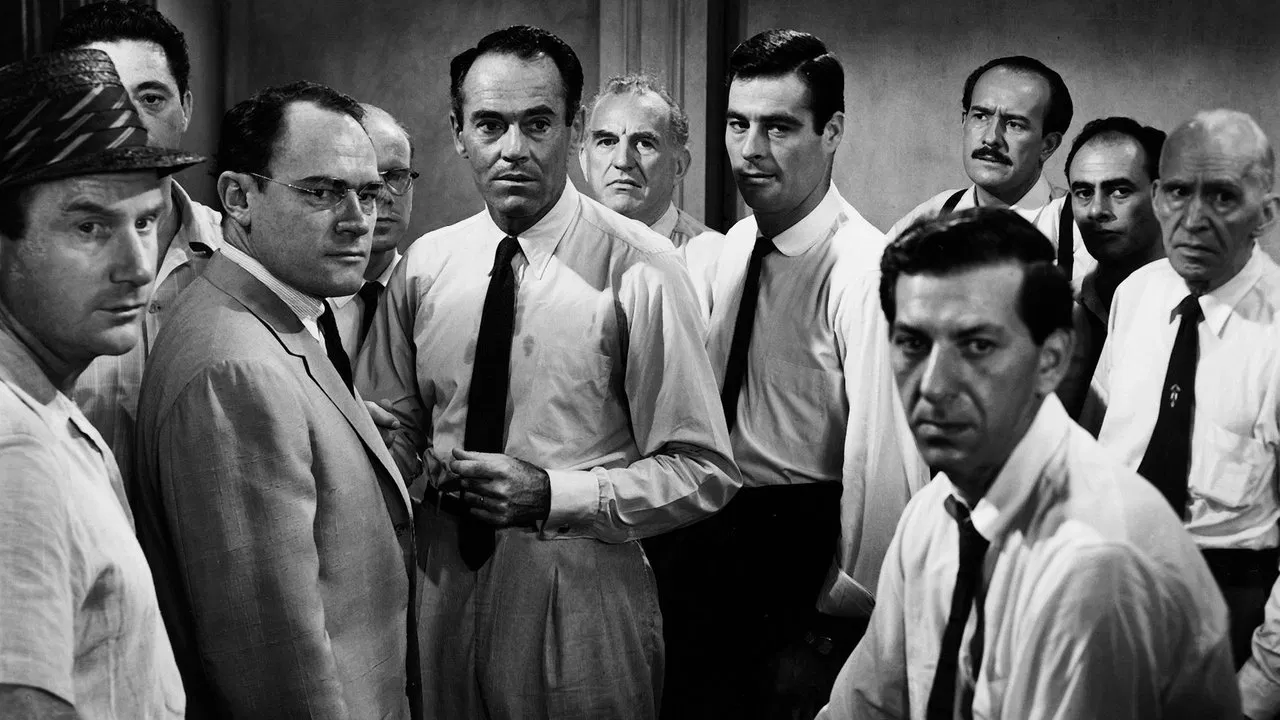
Twelve jurors enter a room to deliberate a murder case. One initially disagrees with the other eleven and asks them to talk before deciding a young defendant’s fate.
Eleven to one
A young man is accused of killing his father and faces a death sentence if convicted. The verdict must be unanimous. Eleven jurors initially vote guilty; Juror 8 votes not guilty, saying he is not certain and wants discussion before deciding.
A knife and a confident claim
Juror 8 produces a similar knife he bought to challenge the claim that the weapon was unique. Another knife does not prove innocence, but it casts doubt on one argument. His bringing outside material into deliberations is a fictional action, not a model of proper real-world jury procedure.
What could the witnesses perceive?
The jurors question whether an elderly witness could reach his door in the time described and whether a passing train could have obscured what he heard. Juror 9 later notices marks suggesting the female witness wore glasses; the group questions whether she could see clearly. That inference raises a possibility, not proof that she saw nothing.
What the jurors bring into the room
Heat, impatience and personal experience affect the discussion. Juror 7 wants to leave for a baseball game. Others turn away when Juror 10 makes prejudiced remarks about people from poor neighbourhoods. Juror 3 remains the last guilty vote as his anger toward his own son enters the argument.
A unanimous verdict and an unanswered question
Juror 3 finally changes his vote, and the jury unanimously finds the defendant not guilty. Jurors 8 and 9 exchange names outside the courthouse. The film never reveals who killed the father; the verdict means the jurors did not find guilt established beyond a reasonable doubt.
After watching
- Which argument changed your view, and which still rests on assumptions?
- How does Juror 3’s relationship with his son affect his vote?
Doubt and truth
The film shows evidence being interpreted through experience and prejudice while leaving the identity of the killer unresolved.
Keep the conversation going
Does the film prove the defendant innocent?
No. It does not reveal who committed the murder; the jurors reach a not-guilty verdict because reasonable doubt remains.