1964–1966
Zulu / The Ipcress File / Alfie
Bromhead, Harry Palmer and Alfie establish contrasting screen identities.
 FLM.RED
ไมเคิล เคน
A voice that can steady a scene
Harry Palmer, Charlie Croker, Scrooge and Alfred: different ways of holding an audience.
Rotherhithe, London, England
Michael Caine can make advice, a joke or a warning feel as though it comes from years of experience. His familiar voice is one part of that effect; the unhurried attention he gives another actor is another. He was born Maurice Joseph Micklewhite on March 14, 1933, in Rotherhithe, London. Repertory theatre and small television parts preceded the screen roles that brought him wider recognition. Zulu (1964), in which he played Lieutenant Bromhead, was an important step toward that visibility.
The Ipcress File (1965) gave him Harry Palmer, a spy whose glasses, dry wit and wary manner made a distinctive screen presence. Alfie (1966) brought a different kind of intimacy: the title character addresses the camera, inviting the audience into his confidence even as his behaviour raises uncomfortable questions. By The Italian Job (1969), Caine was Charlie Croker, setting a robbery plan in motion. These parts reward attention to how he speaks to people, whether he is testing authority, winning sympathy or trying to get a scheme moving.
His two supporting-actor Oscars came from films released more than a decade apart. Hannah and Her Sisters (1986) brought the award at the 1987 ceremony; The Cider House Rules (1999) brought another in 2000. In the latter, directed by Lasse Hallström from John Irving’s screenplay, Caine plays Dr Wilbur Larch. The contrast between the two films is a useful reminder of the range inside his apparently easy delivery: an ensemble comedy-drama and a story about upbringing and responsibility ask different things of the same performer.
The Muppet Christmas Carol (1992) makes particularly good use of his seriousness. Playing Ebenezer Scrooge in Brian Henson’s musical adaptation, Caine treats the character’s bitterness and gradual openness as feelings that matter within the story. The Muppets provide a lively world around him, while his performance gives its emotional changes something firm to rest on. It is an approachable place to see how his control of tone can support both comedy and a story about regret.
A later generation encountered that steadiness through Christopher Nolan’s Batman films. Beginning with Batman Begins (2005), Caine’s Alfred Pennyworth is Bruce Wayne’s butler and an important emotional connection to home. Their conversations give the hero’s choices a personal cost. Caine also appears in Nolan’s The Prestige (2006) and as Professor Brand in Interstellar (2014). Across these larger constructions, a measured voice and a face that registers concern can bring a complicated idea back to a human relationship.
The Great Escaper (2023), alongside Glenda Jackson, returns the scale to a journey shaped by memory. Caine plays Bernard Jordan in a drama based on the veteran who left his care home to attend the D-day commemorations in Normandy. The film offers a later-career performance in which determination has an everyday physical presence. Seen alongside the young schemers and self-assured talkers of his earlier work, it gives another meaning to the experience that listeners hear in his voice.
Bromhead, Harry Palmer and Alfie establish contrasting screen identities.
Plays Charlie Croker in the original heist film.
Wins supporting-actor Oscars for Hannah and Her Sisters and The Cider House Rules.
Plays Ebenezer Scrooge in Brian Henson’s film.
Begins his portrayal of Alfred Pennyworth in Christopher Nolan’s Batman films.
Plays Professor Brand in another collaboration with Nolan.
Stars as Bernard Jordan alongside Glenda Jackson.
Performance readings are FLM.RED editorial interpretation.
Titles in this collection; not a complete filmography.
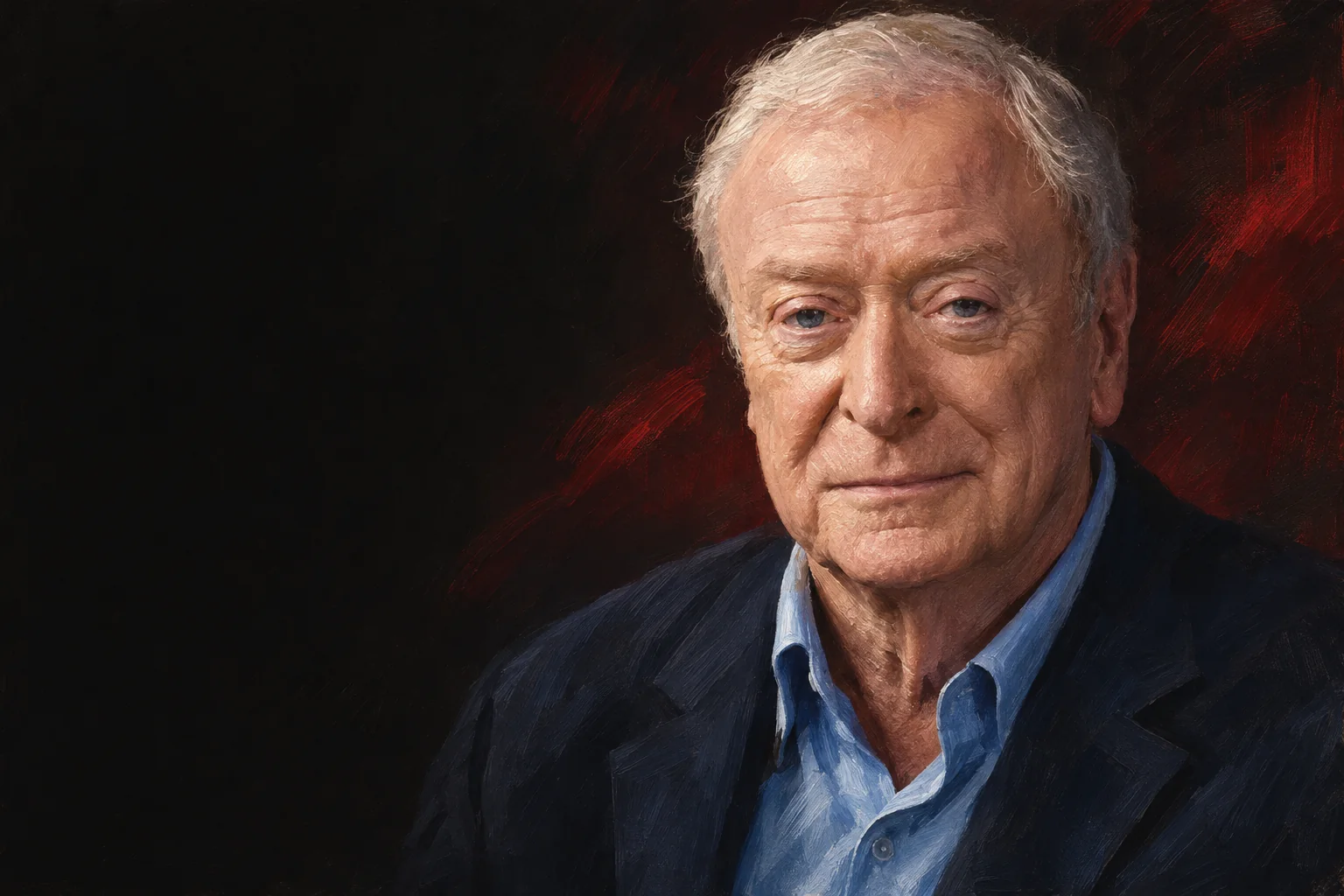
Portrait illustration: FLM.RED.