FLM.RED / After the credits
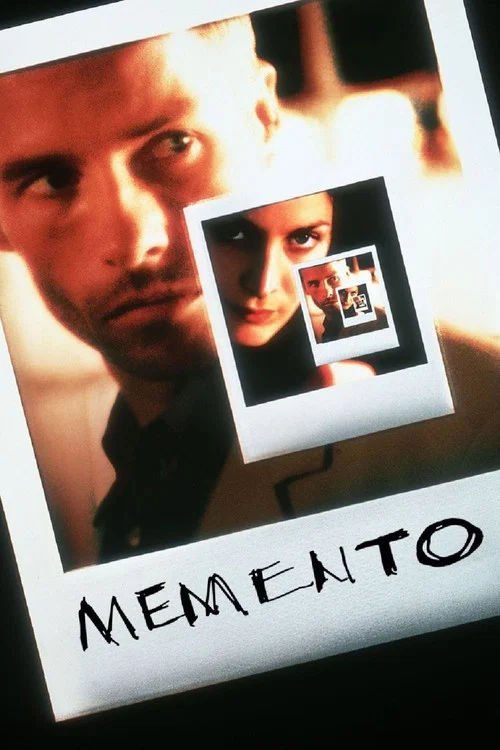
Memento (2000) The evidence Leonard leaves himself
Spoiler warning. This article discusses Teddy’s fate, his claims about Sammy Jankis and Leonard’s decision in the final scene.

Open the recap & discussion — spoilers
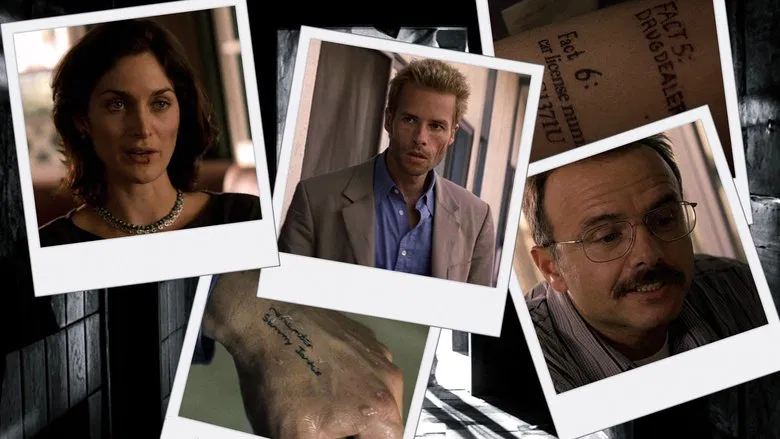
The instant photo in Leonard Shelby’s hand fades instead of developing. Christopher Nolan opens with a photograph working in reverse, then lets Leonard rely on photographs for most of the film. By the end we know the captions can matter as much as the pictures. The Leonard reading one may have forgotten what the Leonard who wrote it wanted him to believe.
Color starts with the result, black and white moves toward it
After an injury, Leonard cannot form lasting new memories. He relies on photographs, notes and tattoos to get from one moment to the next. The opening shows him killing Teddy. The color scenes that follow move back in time in blocks. At the start of each block we have to look at the people and objects in front of us without knowing what happened immediately before, much as Leonard does.
The black-and-white motel scenes move forward. Leonard speaks on the phone and tells the story of Sammy Jankis, whom he knew from his insurance work. The two strands meet after Jimmy’s death as black and white gives way to color. Teddy arrives to challenge the story Leonard has been telling himself.
What Teddy says and what we see Leonard do
Teddy claims Leonard already killed the man he was looking for, and that the story about Sammy’s wife is something Leonard relocated from his own past. The film leaves those claims at odds with the memories we have seen through Leonard. Nolan has described a difference between viewers who trust what they’ve seen in the images and viewers inclined to trust what they hear in that last exchange.
What we see clearly is Leonard deliberately making a piece of information about Teddy into a clue for his future self. He gives himself a reason to distrust Teddy and a reason to go looking for him. A judgment made while he can still remember the conversation is about to become something the Leonard we met in earlier scenes will read as a fact.
Where the end takes us back to the opening
The film ends with Leonard setting himself on the path whose outcome we saw at the beginning. The opening asks why Teddy was killed. The last scene changes the question to who made that killing look necessary to Leonard.
How much of Teddy’s explanation to believe remains open. Leonard’s choice of what to preserve is something we can see him do. The anger or hesitation he felt may be gone the next time he looks at his notes. What he wrote will still be there to shape what he does next.
After the credits
- Once you saw Leonard choose what to write, which earlier photograph did you want to look at again?
- If the film had been told in chronological order, would you have trusted Teddy sooner, or been just as suspicious of him?