FLM.RED / After the credits
Lolita (1997) Whose story is being told?
Spoilers for a drama involving child sexual abuse and coercive control.
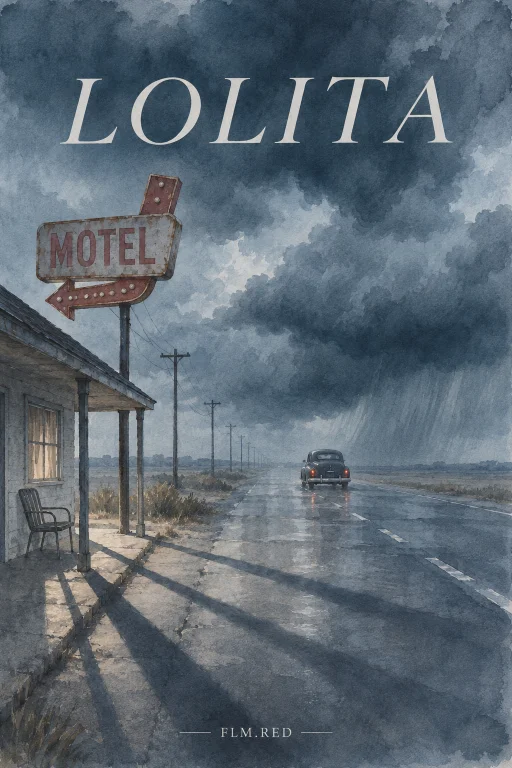
Open the recap & discussion — spoilers
A discussion of how the narrator’s perspective shapes the story of Dolores.
The narrator
Adrian Lyne’s adaptation stays close to Humbert Humbert’s perspective, inviting the viewer to hear his self-serving account. Dolores Haze is a child; Humbert is an adult who abuses and controls her. His descriptions of his feelings should be read alongside that imbalance of power.
Control and isolation
Humbert marries Dolores’s mother Charlotte to remain near her. After Charlotte discovers his diary and dies in an accident, he takes Dolores from camp and travels with her, presenting himself as her guardian. The changing motels and towns underline how dependent and isolated she is.
After the separation
Dolores later leaves him with Clare Quilty, another adult who exploits children. Years later, she asks Humbert for money. Now married and pregnant, she refuses his request to leave with him. Humbert kills Quilty and is arrested; the film states that Humbert dies in prison and Dolores dies from childbirth complications.
Whose voice is missing?
- The ending invites a question about perspective: how much room does the film give Dolores to tell her own story when its narration and images are so close to her abuser? Common Sense Media criticizes its framing of abuse as forbidden romance, while Senses of Cinema examines the film’s subjective visual approach. Those readings help separate cinematic technique from the narrator’s attempts to justify himself.
Before you watch
The 1997 film contains child sexual abuse and violence and is intended for adults. It is distinct from Stanley Kubrick’s 1962 adaptation.
Keep the conversation going
How does the film end?
Humbert kills Quilty and is arrested; the film states that he dies in prison and Dolores dies from childbirth complications.