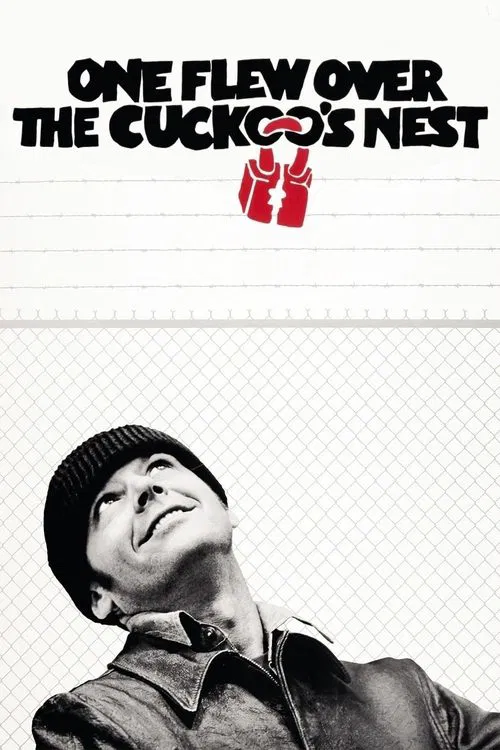
FLM.RED / After the credits
One Flew Over the Cuckoo’s Nest The man who gets out
Spoiler warning. This article discusses character deaths and the final scene.

Open the recap & discussion — spoilers
When McMurphy asks to watch baseball, he wants the men in the ward to see a game together. When the television stays dark, he makes up a play-by-play and they start making noise anyway. A man like Chief Bromden is easy to miss in that room. The ending asks us to follow what happens when he decides for himself what to do.
A room where even baseball takes permission
McMurphy comes to the hospital from prison hoping to make the rest of his sentence easier. Nurse Ratched runs the ward through schedules and group meetings. Even changing the time of a television program depends on a vote whose rules she sets. Miloš Forman gives the dispute a room the two of them will have to return to every day.
What Ratched knows about the men affects how freely they can speak around her. After the party, Billy briefly answers her with confidence. A threat to tell his mother takes that confidence away. Billy dies by suicide, and McMurphy attacks Ratched. A film that spent much of its time on the enforcement of everyday rules has arrived at consequences no one can undo.
The voice McMurphy only just heard
People in the ward assume Chief is deaf and cannot speak. McMurphy hears him answer after giving him gum. Chief has been listening to people who seldom think to listen to him. Talking to McMurphy gives him one thing he can still decide for himself: who gets to know what he has been keeping to himself.
When the orderlies bring McMurphy back, Chief goes to him expecting them to leave together. He finds that a lobotomy has left his friend unresponsive. Chief ends McMurphy’s life before he leaves the ward. What he does at the bedside stays with us even as the sight of him reaching the open air gives the film a feeling of release.
The same window in the morning
McMurphy had tried and failed to lift the heavy fixture in the washroom. At the end Chief lifts it and makes a way out through the window. The noise wakes the others. They get to see Chief finish something McMurphy once made a point of attempting.
As Chief runs into the morning, the camera gives him space the ward never did. The people watching from inside still have to live there. The final image can hold both the courage McMurphy passed on and the limits of what either man was able to change.
After the last shot
- Once Chief speaks, how do you read his silence in the earlier scenes?
- What do you feel watching him run when the scene at the bedside is still fresh?