FLM.RED / After the credits
Names amid the destruction
A spoiler-filled discussion of Oskar Schindler, Itzhak Stern and the ending, with historical context.
Open the recap & discussion — spoilers
In Nazi-occupied Kraków, Oskar Schindler arrives looking for business opportunities. The film follows his changing choices amid the persecution and murder of Jews. The discussion contains spoilers and references to Holocaust violence.
A factory in Kraków
In the film Schindler is a German businessman and Nazi Party member who uses his connections to open an enamelware factory. Jewish accountant Itzhak Stern helps manage the business and helps some people obtain work, which may improve their chances of survival.
The liquidation of the ghetto
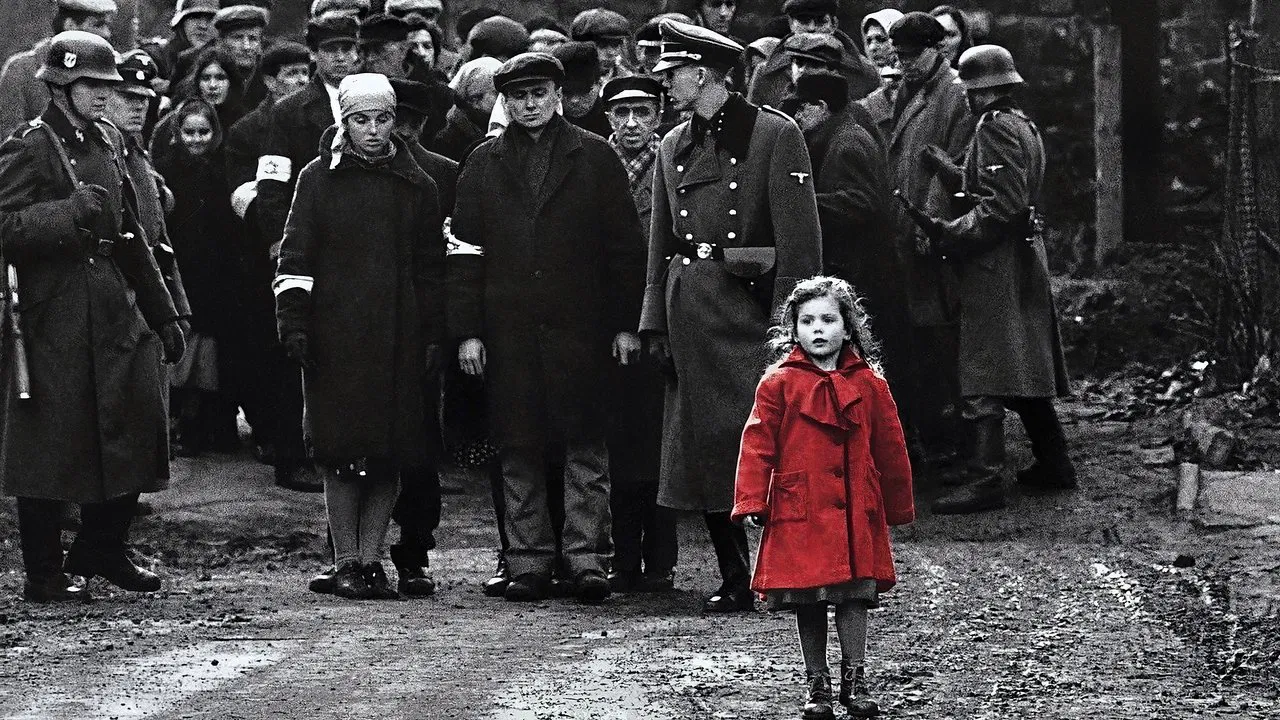
Schindler watches the violent liquidation of the Kraków ghetto and notices a girl in a red coat. He later sees her body among the dead. The colour draws attention to one child within a much wider scene of loss.
Negotiating with Göth
Płaszów commandant Amon Göth exercises brutal power. Schindler negotiates with him to protect workers and establish a work site that offers some of them greater protection. Stern’s knowledge of workers and documents complements Schindler’s money and connections.
The list and the journey to Brünnlitz
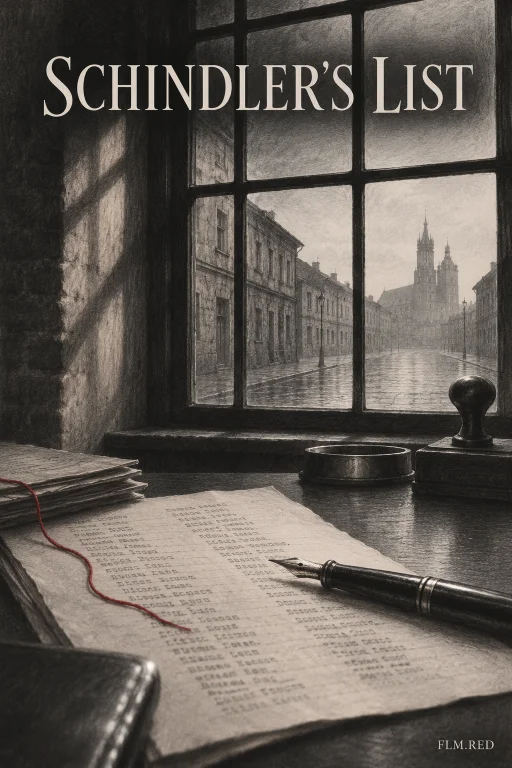
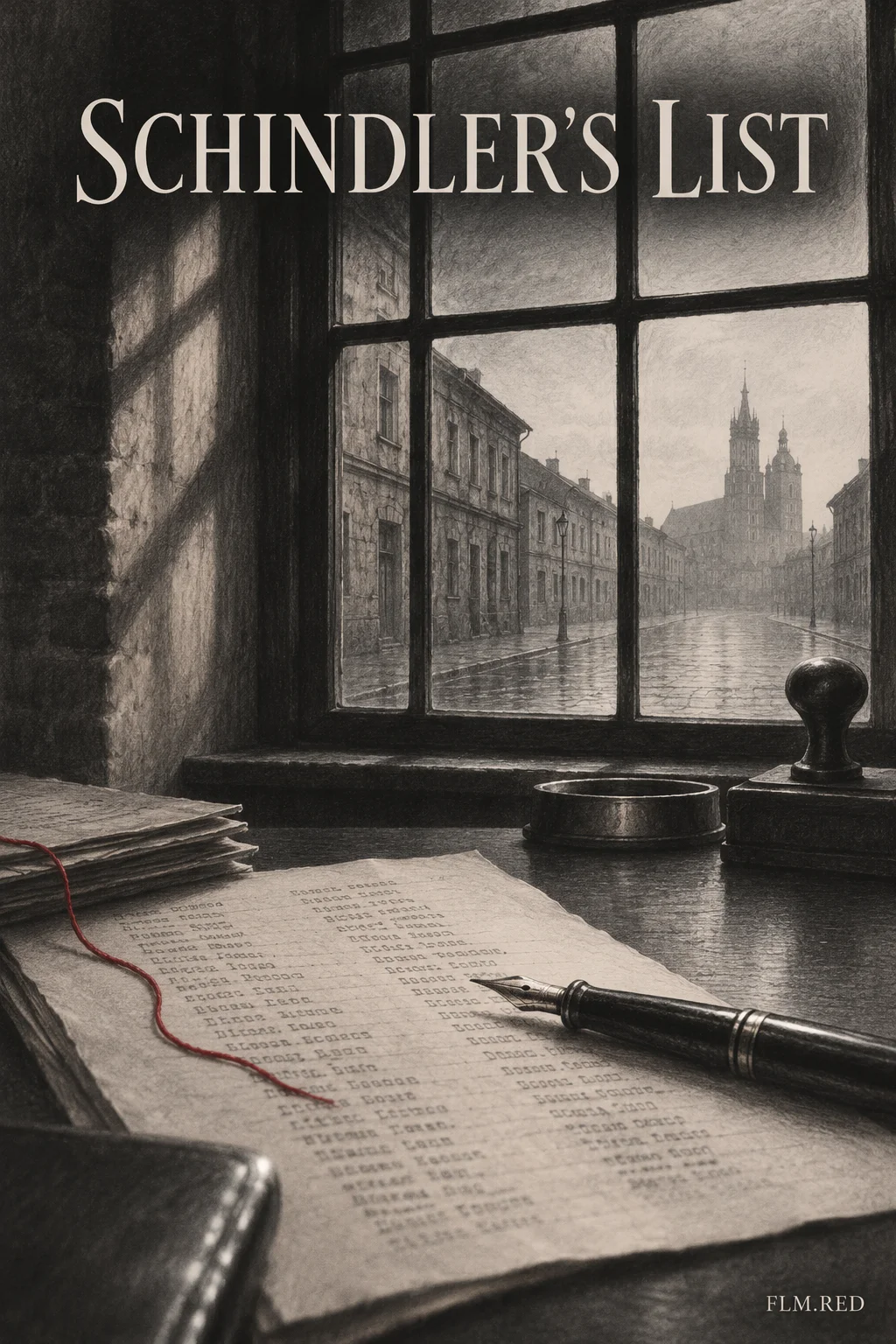
In the film Schindler and Stern compile a list of people to transfer to Schindler’s factory at Brünnlitz. Women and children are mistakenly sent to Auschwitz before Schindler secures their transfer. The United States Holocaust Memorial Museum notes that historically there were multiple transfer lists and Schindler did not write them; the film is not a direct record of every detail.
The ring and the farewell
At the end of the war Schindler must flee. The workers give him a letter and a ring, and he grieves that his possessions might have saved more people. In the final sequence actual survivors and actors place stones on his grave, connecting the film to real lives without erasing the broader catastrophe.
After watching
- What does the film’s focus on Schindler reveal or leave less room to show about the workers?
- How does the final visit to the grave change the experience of the ending?
A film and its history
The film can be a starting point; testimony and historical research offer essential context, including on the transfer lists.
Keep the conversation going
Did Schindler personally write the historical list?
According to the United States Holocaust Memorial Museum, there were multiple transfer lists and Schindler did not write them, though he played an important role in helping workers relocate.