FLM.RED / After the credits
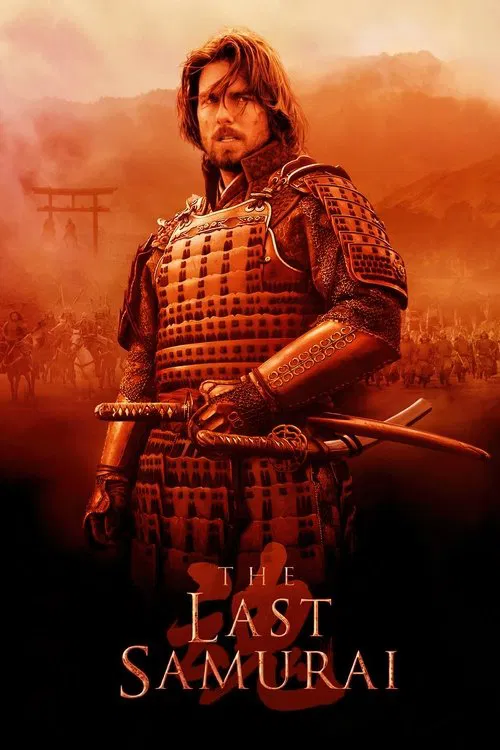
The Last Samurai (2003) How Katsumoto lived
Spoiler warning. This article reveals Katsumoto’s death, the audience with the emperor and the return to the village.

Open the recap & discussion — spoilers
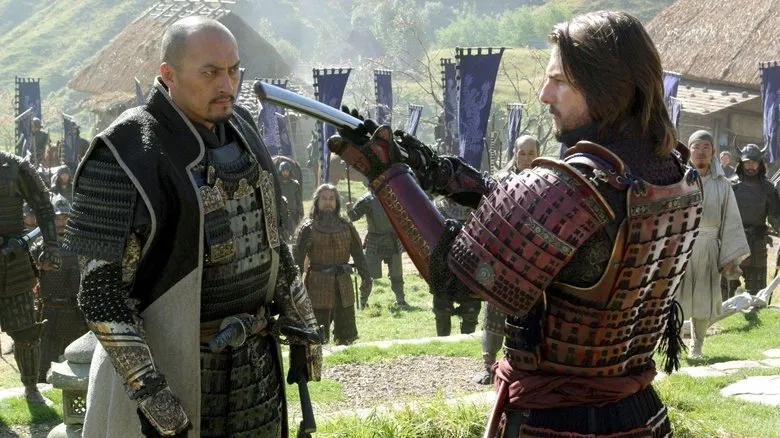
When Emperor Meiji asks how Katsumoto died, Nathan Algren offers to tell him how he lived. Edward Zwick’s film gives that answer a history. We’ve watched an American soldier spend time among the people he was hired to fight, seeing them work, raise children and mourn. He brings their story to the emperor along with Katsumoto’s sword.
The guest Taka did not choose
Algren comes to Japan to train soldiers for the imperial army. After a defeat he is taken captive by Katsumoto and cared for in Taka’s home. Her husband died fighting him. Algren recovers in a house whose family is still adjusting to someone’s absence. The film lets the discomfort of living together linger before any trust begins to grow.
Katsumoto is curious about what Algren has done in war. Algren begins to see how the people holding him live away from battle. The relationship changes through conversations and time spent in one place. What he learns in the village gradually takes the place of the broad account he was given before being sent to fight.
What Katsumoto wants the emperor to remember
Katsumoto remains loyal to the emperor while opposing the direction the government is taking Japan. He is wounded in the last battle and dies. Algren survives and brings his sword to court. Meiji considers what Japan can carry from its past as it modernizes, and turns down the agreement before him.
Zwick took Saigō Takamori as a starting point. Saigō helped restore imperial power and later led a rebellion. Katsumoto takes shape from a historical figure and Algren is fictional. The audience with the sword is the film’s way of resolving its conflict through a character’s memory.
The story that remains after the audience
When the emperor asks about Katsumoto’s death, Algren offers to tell him how the man lived. The answer makes space for the Katsumoto who sat with Algren and went about his life among his people. The battle is over, and the story Meiji is about to hear can still begin somewhere else.
The closing image takes Algren back to the village to see Taka. Simon Graham’s narration leaves room for uncertainty about what came next. The village suggests the peace Algren has been looking for is something he has had to learn by living with others, after arriving as someone paid to change their way of life.
After the credits
- What moment from the village would you want Algren to tell the emperor about first?
- Does the image of Algren returning to Taka feel like an answer about the peace he’s found, or does Graham’s narration leave it as a possibility?